
The part of postnatal care that often gets missed
During pregnancy and birth you're well looked after, and your midwife and then Plunket keep a close eye on your baby. What often gets missed is your body. Months later, your lower back may still not feel right, your neck may ache from feeding, your core may feel weak, and broken sleep can slow your recovery.
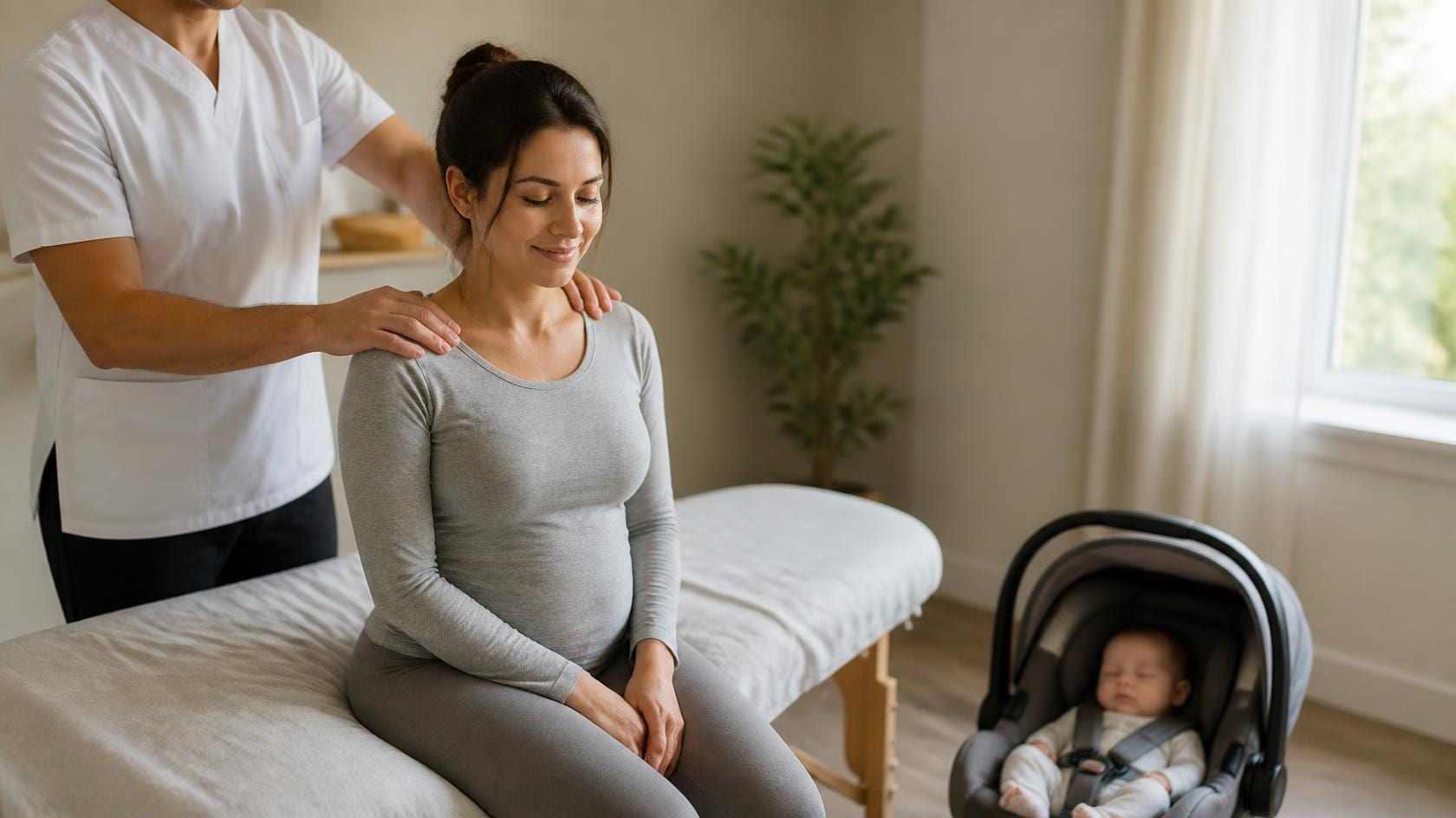
Postnatal osteopathy is gentle, hands-on care that helps your body recover from pregnancy and birth, so you can feel like yourself again. It won't undo the birth or work miracles, but it can ease the strain of nine months of pregnancy, the birth itself, and months of feeding, carrying and settling your baby.
Who this is for
Postnatal osteopathy may help if you:
- Still have lower-back or pelvic pain from pregnancy that hasn't settled by 6–12 weeks
- Get neck, shoulder or upper-back tension from feeding, settling or bending over the cot
- Have wrist, thumb or forearm pain from lifting your baby many times a day ("mother's thumb", also called De Quervain's)
- Feel your ribs or breathing haven't gone back to normal since the pregnancy
- Have headaches that started or got worse after the birth
- Want a check-up before getting back into running or exercise
If you have pelvic-floor symptoms, prolapse or separated tummy muscles, we can work alongside your women's-health physiotherapist. They focus on your pelvic floor and core, while we look after your back, pelvis, ribs and posture, so the two treatments support each other.
What treatment looks like
A first postnatal appointment takes 40–60 minutes. We'll ask about your pregnancy, the birth, how feeding and sleep are going, and what's changed since. Then we'll check your posture, spine, pelvis, ribs, tummy muscles and any areas that are bothering you.
Treatment might include:
- Gentle joint mobilisation for your lower back, pelvis, mid-back and neck
- Soft-tissue release for tight glutes, hips, shoulders and diaphragm
- Rib and diaphragm work to help your breathing settle back to normal
- Practical advice on feeding positions, carrying, sleep set-up and getting back to exercise
You can bring your baby or come alone. Most people come every two weeks for a few sessions, then less often as things settle. There's no fixed programme.
Working with the rest of your postnatal team
Osteopathy is one part of postnatal care, not all of it. We're happy to work alongside your women's-health physio. If something would be better handled by your usual doctor, a lactation consultant or a mental-health professional, we'll tell you, whether that's at the first visit or later on. The right mix of care makes recovery easier.
Ready to book? You can book directly with Kaylee — no referral needed.