
Why babies sometimes benefit from osteopathy
A baby's body goes through a lot in a short time. Their position late in pregnancy, the birth itself (vaginal or caesarean), and long stretches in one position, like feeding on one side, sleeping with their head turned the same way or being carried on one hip, can all leave patterns of tension. Babies have few ways to ease this on their own. Often these patterns settle as your baby grows and moves more. Sometimes they show up as a preference: always feeding on one side, always looking one way, or a small flat spot on the back of the head.
Baby osteopathy isn't about "correcting" anything dramatic. It's about gently nudging these small patterns in the right direction while your baby's skull, spine and tissues are still very adaptable, so a small change now can prevent a bigger problem later.
What we look for
At your baby's first visit, we'll ask about the pregnancy, birth, feeding, sleep, weight gain, milestones, and anything your midwife or usual doctor has mentioned. Then we'll do a careful head-to-toe check, with your baby in your arms or on the table beside you. We look for:
- Unevenness in how your baby holds their head, arms, legs or body
- Cranial tension (tension patterns in the head) left by the birth, especially after long labours, ventouse or forceps, or very fast births
- Tightness in the neck, jaw or diaphragm that can affect feeding
- A flat spot on the back or side of the head, and whether it's staying the same, improving or getting worse
- Muscle tone and reflexes, so we can rule out anything that needs a paediatrician to review
What treatment feels like
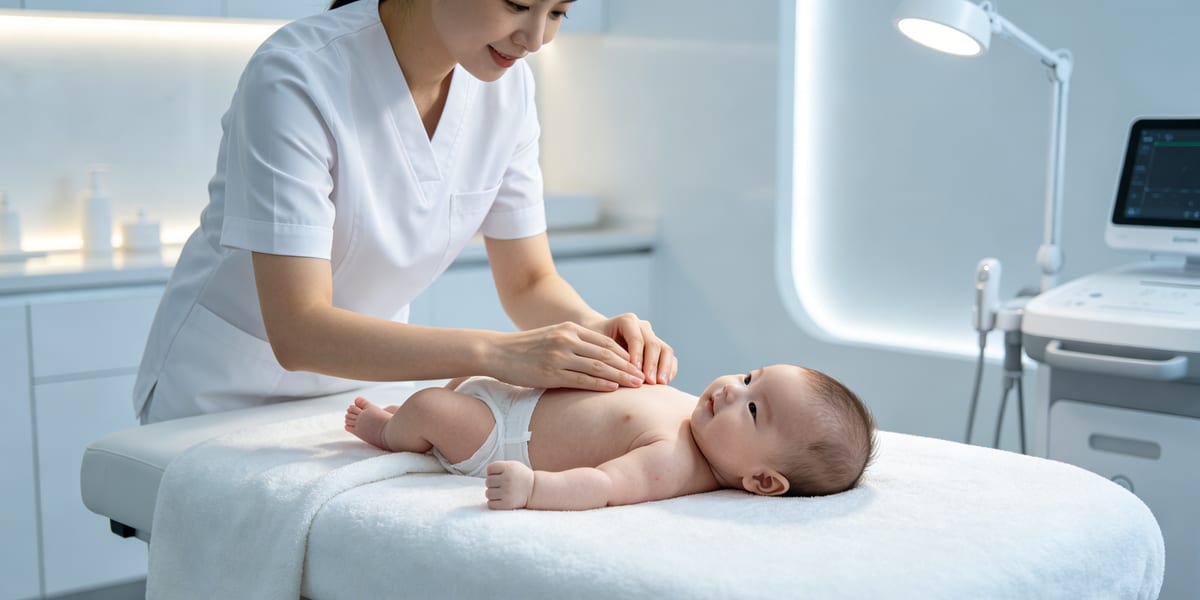
For a young baby, treatment is mostly a gentle hold. Your osteopath may cradle the head with one hand while the other rests on the base of the spine or the ribs. They may gently move a hip or turn the head through its range. There's no cracking, no fast movement and no discomfort. Many babies fall asleep, feed or fill a nappy during the appointment, and that's all completely fine.
Sessions with young babies usually take 30–40 minutes and are never rushed. If your baby is having an unsettled day, we work around it. Sometimes the most helpful thing is 20 minutes of gentle contact and some practical positioning tips for the week ahead.
Working alongside your other care
Baby osteopathy works alongside your midwife (in the first six weeks), your Plunket nurse, your usual doctor and, where needed, a lactation consultant, paediatric physio or paediatrician. If we notice something outside our scope, such as a possible tongue-tie, reflux, a hip that a paediatric physio should check, or a weight-gain concern, we'll tell you and encourage you to raise it with the right person straight away.
Ready to book your baby in? You can book directly online — no referral needed.